Why Choose Ultrafine Powder Coating for Your Business Needs?
In today's competitive market, businesses seek innovative solutions to enhance product quality and durability. Ultrafine Powder Coating has emerged as a leading choice, offering superior benefits. According to a report by Allied Market Research, the global powder coating market is projected to reach $42.4 billion by 2027, indicating significant growth in this sector.
Ultrafine Powder Coating provides a smooth and uniform finish, improving aesthetic appeal. It enhances corrosion resistance and offers excellent mechanical properties. Recent studies show that products coated with ultrafine powders last up to 30% longer than traditional coatings. However, businesses must consider challenges such as application costs and the learning curve associated with new technologies.
As companies strive for sustainability, Ultrafine Powder Coating aligns well with environmental goals. It produces minimal waste and often contains no harmful solvents. Despite these advantages, businesses must assess their specific needs to ensure a suitable fit. This careful evaluation is essential to leverage the full potential of ultrafine technologies in enhancing operational efficiency.

Benefits of Ultrafine Powder Coating for Various Industries
Ultrafine powder coating is transforming various industries. Its fine particles provide superior coverage and adhesion, making it ideal for complex shapes. This technology allows businesses to achieve a smoother finish. The durability of ultrafine coatings is a game changer, especially in sectors like automotive and aerospace. These industries require high performance under tough conditions.
The application process is efficient, reducing waste compared to traditional coatings. Businesses can save on materials and labor costs. However, achieving uniform application can sometimes be tricky. Proper training is essential for workers to maximize the benefits. Understanding equipment settings is necessary to prevent imperfections in the final product.
Environmental benefits also stand out. Ultrafine powder coatings often contain fewer volatile organic compounds (VOCs). This is crucial for companies aiming for sustainability. However, transitioning to this technology requires adaptation. Some industries may face initial challenges in workflow adjustments. Yet, the long-term advantages often outweigh these early hurdles.
Why Choose Ultrafine Powder Coating for Your Business Needs? - Benefits of Ultrafine Powder Coating for Various Industries
| Industry |
Benefits of Ultrafine Powder Coating |
Durability |
Environmental Impact |
Cost Efficiency |
| Automotive |
Superior finish and color retention |
High abrasion resistance and strong adhesion |
Low VOC emissions, making it eco-friendly |
Reduced material waste and longer life span |
| Furniture |
Available in a variety of colors and textures |
Highly resistant to chipping and scratching |
Reduced environmental footprint than liquid coatings |
Less rework needed, saving on overall costs |
| Electronics |
Provides an attractive finish while insulating |
Resistant to corrosion and chemicals |
Compliance with environmental regulations |
Lower energy consumption during application |
| Construction |
Enhanced aesthetic appeal for various structures |
Long-lasting and tough against environmental factors |
Safe for workers and surrounding areas |
Cost-effective for large scale applications |
Comparison of Ultrafine Powder Coating and Traditional Coating Methods
When comparing ultrafine powder coating with traditional methods, several factors stand out.
Ultrafine powder coatings offer
enhanced durability and a smooth finish. This method reduces the likelihood of corrosion and wear.
Traditional liquid coatings often fall short in these areas. They may require multiple layers to achieve a similar effect.
This can increase costs and processing time.
Application differences also play a crucial role.
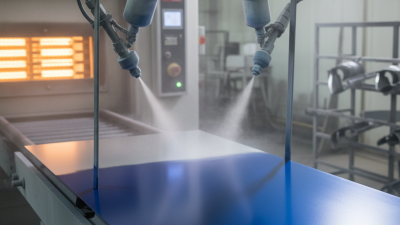
Ultrafine powder coating uses an electrostatic process, allowing for a more even application and less waste.
In contrast, traditional coatings often lead to overspray and higher material usage.
The advantages here could impact your bottom line significantly.
However, ultrafine powder coating isn't without its challenges.
It requires specialized equipment, which can pose initial investment hurdles.
Additionally, the curing process can be time-consuming.
It's essential to weigh these factors against your specific needs. Finding a balance between quality and cost is vital in making the right choice for your business.
Environmental Impact and Sustainability of Ultrafine Powder Coating
Ultrafine powder coating has gained traction due to its environmental advantages. This process minimizes hazardous waste, as studies show that over 90% of the powder is recyclable. A report by the Environmental Protection Agency emphasizes that powder coatings contribute to less volatile organic compound (VOC) emissions. Traditional liquid paints often release a significant amount of VOCs, which can be harmful. Ultrafine powders offer a sustainable alternative with reduced environmental impact.
The production of ultrafine powders typically requires less energy compared to conventional coatings. Research from the European Coatings Journal indicates that energy consumption can be reduced by 30% or more. This reduction not only lowers operational costs but also aligns with global sustainability goals. Implementing ultrafine powder coating processes in manufacturing can enhance a company's ecological footprint.
While switching to ultrafine powder coatings is promising, challenges exist. The initial investment in technology may be high for some businesses. Training employees on new processes requires time and resources. Businesses must weigh these factors carefully. Yet, the long-term benefits of reduced waste and lower emissions can outweigh the initial hurdles over time.
Cost-Effectiveness of Ultrafine Powder Coating Solutions
Ultrafine powder coating offers significant cost-effectiveness for businesses seeking durable finishes. According to a report by the American Coatings Association, companies can save between 15-30% on operational costs when switching from traditional liquid coatings to ultrafine powder options. The efficiency of the application process, combined with lower material waste, contributes to these savings.
The ultrafine particles provide enhanced coverage. This efficiency means less time is needed for touch-ups and rework, translating directly into lower labor costs. A study by the European Coatings Journal indicates that using ultrafine powder can increase productivity by up to 20%. However, investment in proper equipment is necessary, which can be a barrier for some businesses.
While initial setup costs may be high, the long-term benefits often outweigh the disadvantages. Durability is another aspect. Ultrafine powder coatings resist scratches, corrosion, and fading. Yet, some industries report challenges with application consistency. Continuous training and proper maintenance are vital for achieving the desired results. A balance between upfront costs and ongoing operational efficiency remains essential for decision-making.
Applications and Versatility of Ultrafine Powder Coating in Manufacturing
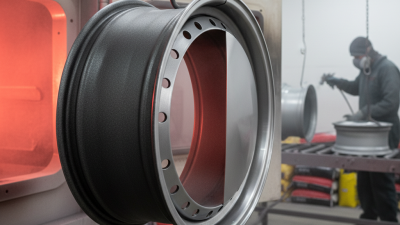
Ultrafine powder coating stands out for its vast applications in manufacturing. This coating technique allows for a smooth, high-quality finish on various materials. It is often used in industries such as automotive, aerospace, and electronics. The particle size of ultrafine powders enables excellent surface coverage. This leads to thicker films without running or sagging.
In addition to smooth finishes, ultrafine powder coatings offer exceptional durability. They resist fading, scratching, and corrosion. This added toughness makes them ideal for outdoor applications. Many manufacturers appreciate their versatility. However, not every project demands such precision. In some cases, standard coatings may suffice and can be more cost-effective.
The application process is crucial. Properly trained technicians must ensure even coverage. Any imperfections in application can lead to weaknesses. Industries must continually assess their needs. Evaluating the coating's performance helps identify if ultrafine powder is truly necessary. Adopting a critical approach to material selection can enhance overall production quality.
Applications of Ultrafine Powder Coating in Manufacturing