What is Ultrafine Powder Coating and Its Benefits for Industry?
Ultrafine Powder Coating is gaining traction in various industries due to its unique properties and benefits. Recent reports from the American Coatings Association indicate that the ultrafine powder coating market is projected to expand by over 10% annually. This growth is driven by increased demand for durable and environmentally-friendly coatings.
Experts like Dr. Steven Ramirez, a prominent figure in the coatings industry, emphasize, “Ultrafine Powder Coating represents a significant advancement in surface treatment technology.” Companies are adopting this technique, as it provides superior adhesion and enhances product longevity. The fine particles involved allow for an even application, reducing visible defects and improving overall aesthetics.
Moreover, despite its advantages, the integration of Ultrafine Powder Coating faces challenges. Skilled technicians are essential for optimal application. Industry professionals acknowledge the need for continuous training. Effective implementation can be complex, but the benefits often outweigh initial hurdles. Enhanced durability and lower environmental impact make ultrafine coatings an attractive option for manufacturers.
What is Ultrafine Powder Coating?
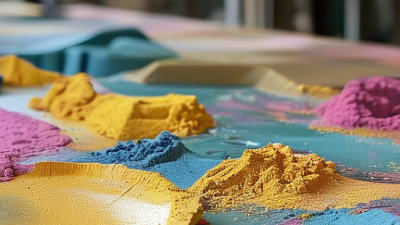
Ultrafine powder coating is an advanced surface treatment technique that utilizes polymers reduced to an extremely small particle size. The particles are typically smaller than 10 microns, enabling a smooth finish with minimized defects. Reports estimate that the ultrafine powder coating market reached approximately $7 billion in 2022 and is projected to grow significantly, driven by rising demand in various industries like automotive, electronics, and furniture.
One major benefit of ultrafine powder coating is its outstanding durability. The coatings offer excellent resistance to scratches, chemicals, and UV exposure. This is crucial in industries like automotive manufacturing, where protective finishes must withstand harsh conditions. Additionally, the fine particles allow for better flow and coverage, leading to a more uniform coat. However, achieving this uniformity can be challenging. The application process requires precision to avoid issues like overspray or incomplete coverage, which can undermine the overall quality.
Moreover, the energy efficiency of ultrafine powder coatings is an important consideration. They emit little to no volatile organic compounds (VOCs), making them environmentally friendly. According to a 2021 market analysis, industries that adopt these coatings can reduce their environmental impact by approximately 30%. Despite these advantages, companies must address the initial higher costs compared to traditional coatings. This factor may hinder adoption, requiring careful cost-benefit analysis to justify the switch.
The Process of Ultrafine Powder Coating Application
Ultrafine powder coating is an advanced technique used in various industries. The application process involves several meticulous steps to ensure optimal results. Initially, the substrate surfaces are cleaned to remove all contaminants. This is crucial because any residue can affect adhesion. The surfaces are then pre-treated, typically through processes like sandblasting or chemical cleaning, to enhance bonding with the powder.
Once pre-treated, the ultrafine powder is applied using an electrostatic spray process. This technology provides a uniform coat. The powder particles are charged, allowing them to cling to the targeted surfaces effectively. After application, curing occurs in an oven. This step is essential as it allows the powder to melt and form a strong bond. The result is a smooth, durable finish that is resistant to chipping, fading, and corrosion.
While this process offers many benefits, challenges exist. Achieving a consistent application can be difficult. Factors like humidity and temperature must be controlled. Additionally, the waste of powder during application can be significant. Companies must find ways to minimize this while ensuring quality. This requires careful planning and sometimes trial and error. Despite these challenges, ultrafine powder coating remains a popular choice due to its long-lasting results and aesthetic appeal.
Key Benefits of Ultrafine Powder Coating for Industries
Ultrafine powder coating has gained attention in various industries due to its unique properties. This technology utilizes extremely fine particles that create a smoother finish. The coatings provide superior adhesion, making them ideal for complex geometries and intricate designs. The fine particles allow for even coverage, enhancing the aesthetics and durability of coated surfaces.
One of the key benefits of ultrafine powder coating is its environmental advantage. This process produces minimal waste and reduces the need for solvents. Many industries are striving to adopt greener practices. This shift not only helps the environment but also aligns with regulatory standards. In sectors like automotive and aerospace, this innovative coating technique enhances performance and longevity without compromising safety.
While ultrafine powder coating has many benefits, challenges remain. The application process can be sensitive to environmental conditions. Humidity and temperature can impact the coating outcome. Industries must consider these factors to achieve optimal results. Moreover, the initial investment in technology may deter some businesses. It’s crucial to evaluate the long-term benefits against these upfront costs. Overall, ultrafine powder coating holds significant potential for improving industrial applications.
Benefits of Ultrafine Powder Coating for Industries
Comparison of Ultrafine Powder Coating with Traditional Coating Methods
Ultrafine powder coating represents a significant advancement over traditional coating methods. Traditional coatings often rely on wet applications, which can lead to uneven surfaces. In contrast, ultrafine powder coating provides a smoother finish due to its fine particles. This method allows for better adhesion and durability, making it ideal for various industrial applications.
One key difference lies in the curing process. Traditional coatings typically require solvents that can weaken the structure over time. Ultrafine powder coating uses heat to fuse particles, forming a strong, resilient layer. This method reduces the emission of volatile organic compounds (VOCs), making it a more environmentally friendly option. However, achieving uniform coating thickness can be challenging and requires skilled application techniques.
In terms of cost-efficiency, ultrafine powder coatings might demand higher initial investments. Equipment and technology for powder coating can be pricier than traditional setups. However, the long-term benefits often outweigh these costs. Industries may need to adjust their processes, leading to potential downtime during the transition. The learning curve can also be steep, as workers adapt to new techniques and machinery. Balancing these factors is crucial for successful implementation in any facility.
Future Trends in Ultrafine Powder Coating Technology
Ultrafine powder coating technology is gaining traction in various industries. This trend stems from its unique benefits, such as improved durability and enhanced finish quality. The market for ultrafine powder coatings is projected to grow by 6.5% annually, according to a recent industry report. This growth signifies a shift toward innovative and efficient coating solutions.
Future trends in ultrafine powder coating are poised to focus on sustainability. As environmental regulations tighten, companies will look for eco-friendly alternatives. Biodegradable powder coatings are becoming popular. They reduce harmful emissions and minimize waste, aligning with global sustainability goals. Notably, advanced formulations are being explored for enhanced performance.
Tip: Consider adopting smart application techniques. Utilizing electrostatic spray systems can improve efficiency and reduce overspray.
Another trend is the integration of nanotechnology in powder coatings. This will allow for improved adhesion, corrosion resistance, and scratch resistance. However, challenges remain in ensuring consistency and quality in production. Continuous research is essential to overcome these hurdles.
Tip: Regular testing and quality control can help maintain product integrity. Implementing stringent measures will ensure reliable performance across different applications.
What is Ultrafine Powder Coating and Its Benefits for Industry?
| Dimension |
Description |
Benefits |
| Particle Size |
Ultrafine powder typically ranges from 1 to 10 microns. |
Improved coverage and finishing quality. |
| Application Method |
Applied via electrostatic spray or fluidized bed. |
Enhanced adhesion and reduced waste. |
| Cure Temperature |
Typically cured at lower temperatures compared to conventional coatings. |
Energy savings and reduced thermal stress on substrates. |
| Environmental Impact |
Contains fewer volatile organic compounds (VOCs). |
Less harmful to the environment and improved workplace safety. |
| Durability |
Highly resistant to corrosion, chemicals, and abrasions. |
Extended lifespan of coated products and reduced maintenance costs. |
| Market Trends |
Growing demand in automotive and aerospace sectors. |
Innovations in formulation and application techniques. |