10 Tips for Choosing Silver Powder Coat Finishes for Your Projects?
Choosing the right finish for your projects can be challenging. Silver powder coat finishes stand out for their aesthetic appeal and durability. These finishes give a sleek, modern look while providing excellent protection against corrosion.
When selecting a silver powder coat, consider the intended use of the item. Will it be indoors or outdoors? Understanding the environment is crucial. The finish must endure various conditions. Sometimes, the color may appear different under different lighting. This inconsistency can be frustrating, so evaluate samples in your project’s specific environment.
Also, consider the texture of the powder coat. A smooth finish may be more elegant, but a textured one can hide imperfections better. It’s important to reflect on these factors to avoid disappointment. While silver powder coat offers many advantages, not every finish will meet your expectations. Careful consideration can lead to the perfect choice for your projects.

Understanding Silver Powder Coat Finishes and Their Benefits
Silver powder coat finishes offer
durability and aesthetic appeal for various projects. They are resistant to corrosion,
chipping, and fading, making
them ideal for outdoor use. According to a report by the Powder Coating Institute, over
90% of powder coatings outperform traditional liquid paints in durability.
This makes silver finishes a wise choice for items exposed to the elements.
When selecting a silver powder coat finish, consider the texture.
Smooth finishes give a sleek and modern look, while textured surfaces can hide imperfections better.
It's essential to choose a finish that complements your project’s design. Remember, not all silver powders are equal.
Some may lack the desired shine or durability.
Tip: Always obtain samples before committing to a color.
Testing the finish will help ensure it meets your expectations. Another important consideration is the curing process.
Improper curing can lead to a subpar finish.
Explore the specific requirements of your project. Some surfaces may need pre-treatment or special adhesion properties.
Not every type of silver powder coat will adhere well to every material. Don’t overlook guidance from industry experts or reports
on trends and performance standards in powder coating.
Evaluating Different Shades of Silver for Your Project Needs
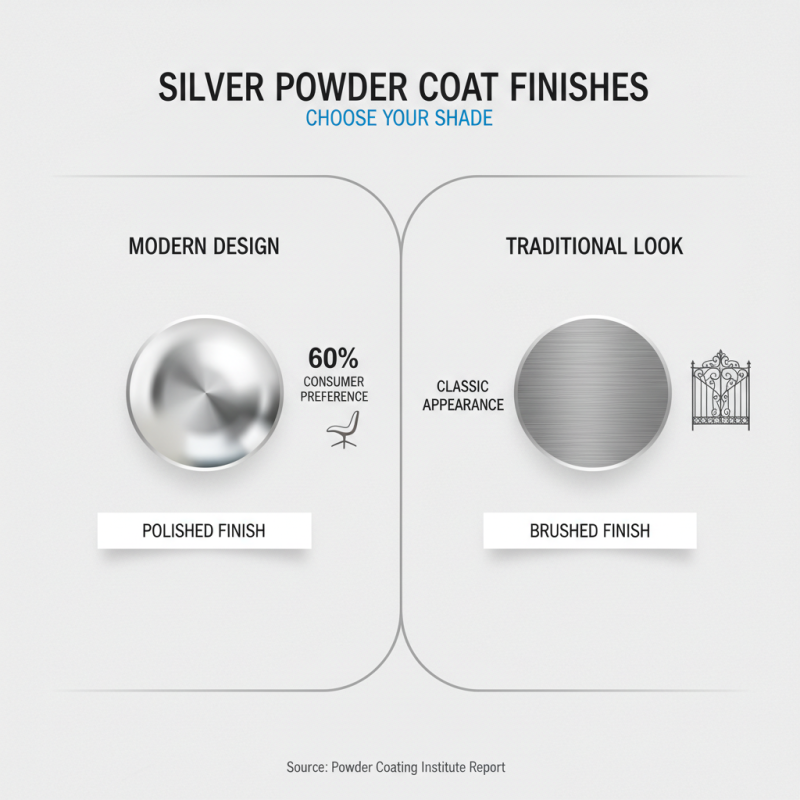
When selecting silver powder coat finishes, evaluating different shades is crucial. Each shade can convey distinct moods and perceptions. A report by the Powder Coating Institute highlights that over 60% of consumers prefer a polished silver finish for modern designs, while others lean towards brushed finishes for a more traditional look. It’s essential to consider how these variations might impact the overall aesthetic of your project.
The undertones in silver can dramatically alter the appearance. For instance, a cooler silver with blue undertones may appear sleek and contemporary, while a warmer shade with hints of gold can evoke elegance and warmth. Industry studies show that the right choice can augment the value of your project by up to 25%. However, not all silver finishes hold up equally under different environmental conditions. Some may fade faster or show scratches more readily.
Furthermore, various applications might require specific qualities from the powder coat. For outdoor projects, choosing a finish with UV resistance is vital. Interestingly, a survey indicated that about 30% of professionals reported regretting their choice of silver tones after installation due to fading concerns. This underlines the importance of thorough evaluation before committing to a specific shade.
Assessing Durability and Resistance of Silver Powder Coating
When selecting a silver powder coat finish, durability is crucial. Powder coating provides a tough, resilient surface. According to industry studies, well-applied powder coatings can withstand temperatures up to 400°F without chipping or fading. However, not all powder coatings deliver the same performance.
Resistance to common environmental factors is vital in assessing durability. Silver powder coats must resist corrosion and UV damage. A report from the Powder Coating Institute indicates that high-quality coatings can exhibit up to 1,000 hours of salt spray resistance. This performance can vary widely based on application techniques and the underlying substrate.
Aesthetics also matter. Silver finishes can vary in sheen and texture. Some may appear dull or inconsistent, while others shine brightly. Choosing the right finish involves balancing visual appeal with durability. Flaws in application could lead to uneven surfaces or weak spots, affecting longevity. Pay attention to manufacturer specifications and product warranties. These details often contain critical insights about the coating's performance, helping in making an informed decision.
Durability and Resistance of Silver Powder Coating Finishes
This chart illustrates the resistance levels of silver powder coating finishes in various categories such as corrosion, UV, chemical, scratch, and impact resistance. The percentages indicate the level of resistance, providing insights for selecting the best finish for your projects.
Selecting the Right Application Techniques for Optimal Results
When selecting application techniques for silver powder coat finishes, preparation is critical. Start by ensuring your surface is clean and free of contaminants. Any dust or grease can disrupt the finish. Consider using a media blast to achieve a smooth surface texture. This can drastically improve adhesion.
The application method you choose can affect the final look. Electrostatic spraying is often preferred for its even coverage. However, achieving a consistent layer can be tricky. Practice will help. If you're new to this, testing on scrap surfaces is wise. Achieving the ideal thickness is crucial. Too thin may not provide the durability you need.
Post-application, curing is essential for durability. This process can vary based on the finish and environment. Keep an eye on the temperature and time to prevent running or bubbling. Sometimes, imperfections occur despite your best efforts. Learning from these mistakes can enhance future projects. Adjustment in your approach is part of the journey toward getting it right.
Budgeting and Cost Considerations for Silver Powder Coat Finishes
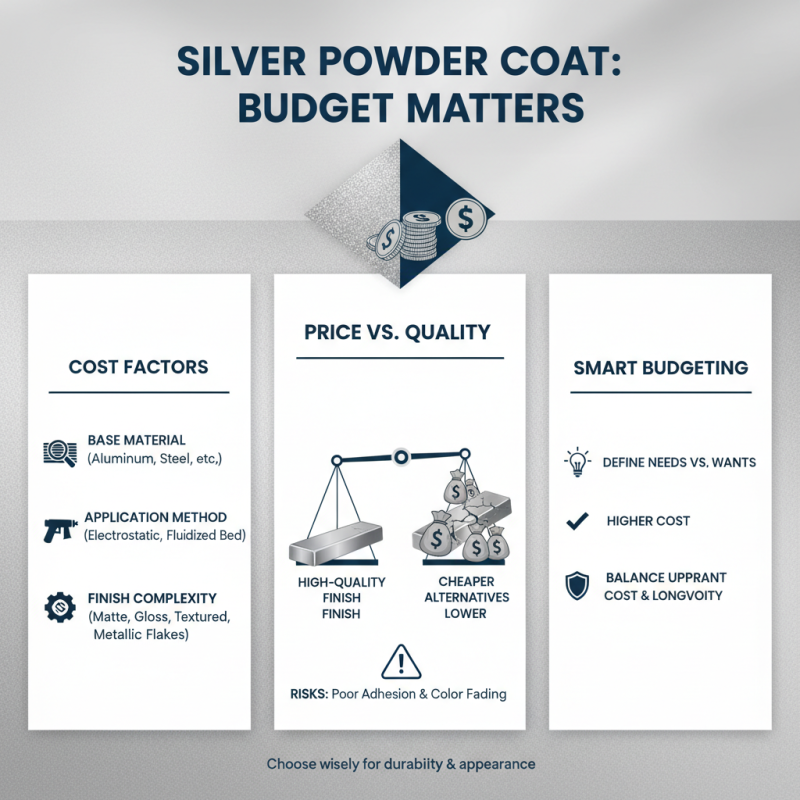
When considering silver powder coat finishes, budgeting plays a critical role. The choices available can vary widely in cost. Factors such as the type of base material, application methods, and the complexity of the finish all influence expenses. A high-quality finish may not always fit a tight budget. Yet, opting for cheaper alternatives can lead to issues. Poor adhesion or color fading could be a gamble.
Investing in a durable powder coat can save money long-term. This means less maintenance and fewer repairs. Think about the projects you're accomplishing. Are they for outdoor use, or will they be sheltered? Choosing the right finish often requires careful thought and planning. Sometimes, a more expensive finish offers better longevity. Analyze specific needs to avoid future costs. Balancing quality and budget requires reflection and adjustment.