Why Choose Poly Powder Coating for Your Next Project?
Poly Powder Coating offers a remarkable solution for modern manufacturing needs. According to a report by Smithers Pira, the powder coating market is projected to reach $15 billion by 2027. Increasing demand stems from its durability and eco-friendliness. Experts emphasize its effectiveness; John Anderson, a leading industry specialist, states, “Poly Powder Coating enhances both aesthetics and longevity.”
Utilizing Poly Powder Coating provides numerous benefits. Its ability to resist chipping, scratching, and fading makes it ideal for various applications. Many industries, from automotive to furniture, rely on this technology. However, not all companies measure its effectiveness properly, leading to inconsistencies. Businesses must analyze their processes and outcomes critically.
Despite its advantages, Poly Powder Coating isn’t a one-size-fits-all solution. Some projects require different finishes or application methods. It’s essential to assess specific needs and align them with the right coating choice. As industry trends evolve, continuous research will help improve practices.
Understanding Poly Powder Coating: What It Is and How It Works
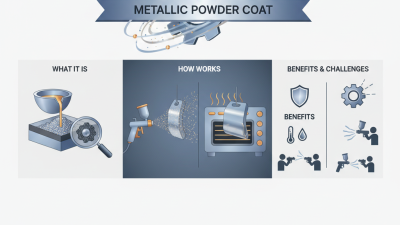
Poly powder coating is a modern finishing technique. It's a process that involves applying a dry powder to a surface. The powder consists of resins and pigments. This mix stays on the surface until it is heated. When heated, the powder melts and flows into a smooth finish. It creates a durable, protective coating that resists corrosion and wear.
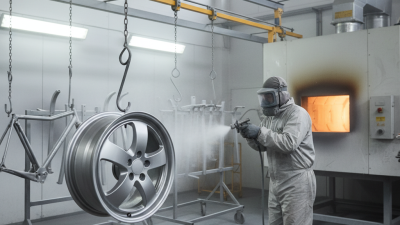
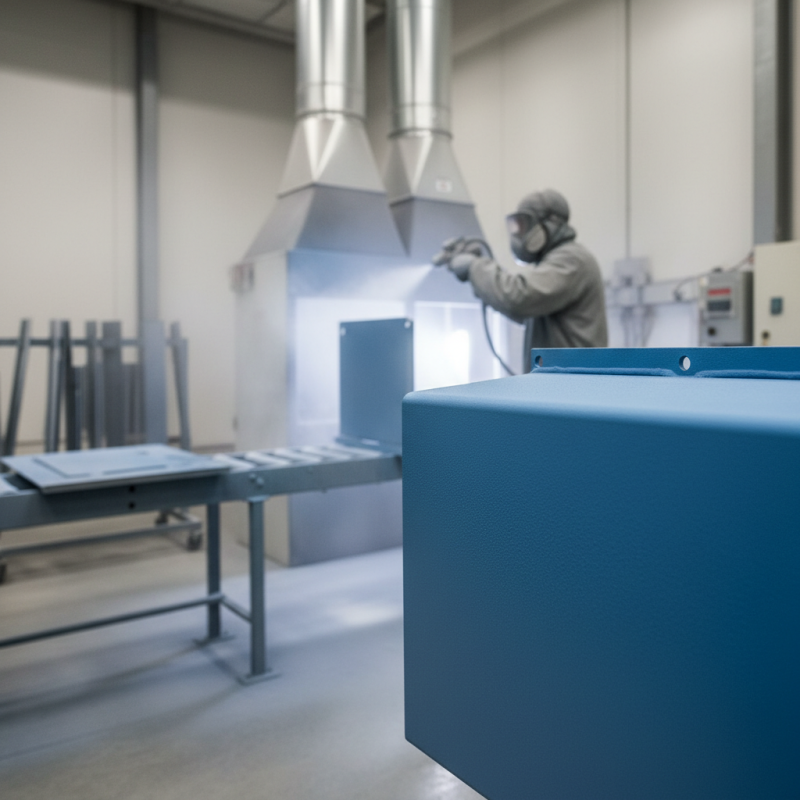
The application of poly powder coating involves several steps. First, the item is cleaned to remove dirt and grease. Then, it is pre-treated to enhance adhesion. After that, the powder is applied using an electrostatic spray gun. This makes the powder cling to the surface effectively. The coated item is then placed in an oven. This curing process is crucial, as it transforms the powder into a solid, attractive finish.
While poly powder coating offers many benefits, it is not without challenges. Sometimes, uneven application can occur. There may be areas that are thicker or thinner than desired. This can affect the overall look of the finish. Additionally, achieving the perfect color match may require several attempts. These issues highlight the importance of careful preparation and application.
Key Benefits of Using Poly Powder Coating for Your Next Project
Poly powder coating offers numerous advantages for various projects. Its durability is a standout feature. This finish can withstand harsh weather conditions. It resists chipping, scratching, and fading. The result is a long-lasting appearance that often requires minimal maintenance. Many industries prefer it for outdoor applications. This longevity could lead to cost savings over time.
Another key benefit is its environmental friendliness. Unlike traditional paint, poly powder coating releases fewer volatile organic compounds. This makes it safer for both the environment and workers. The process produces less waste, which is increasingly important in today's eco-conscious world. Preparing surfaces for this coating can be simple. Yet there are challenges, such as ensuring surfaces are free from contaminants.
The aesthetic versatility of poly powder coating is also noteworthy. It comes in a wide range of colors and finishes. However, finding the perfect match can sometimes be daunting. The choices are many, but not all options may be suitable for every project. It can be frustrating to narrow down selections. Despite these complexities, the rewards of using poly powder coating often outweigh the drawbacks.
Key Benefits of Using Poly Powder Coating
Comparing Poly Powder Coating with Other Finishing Methods
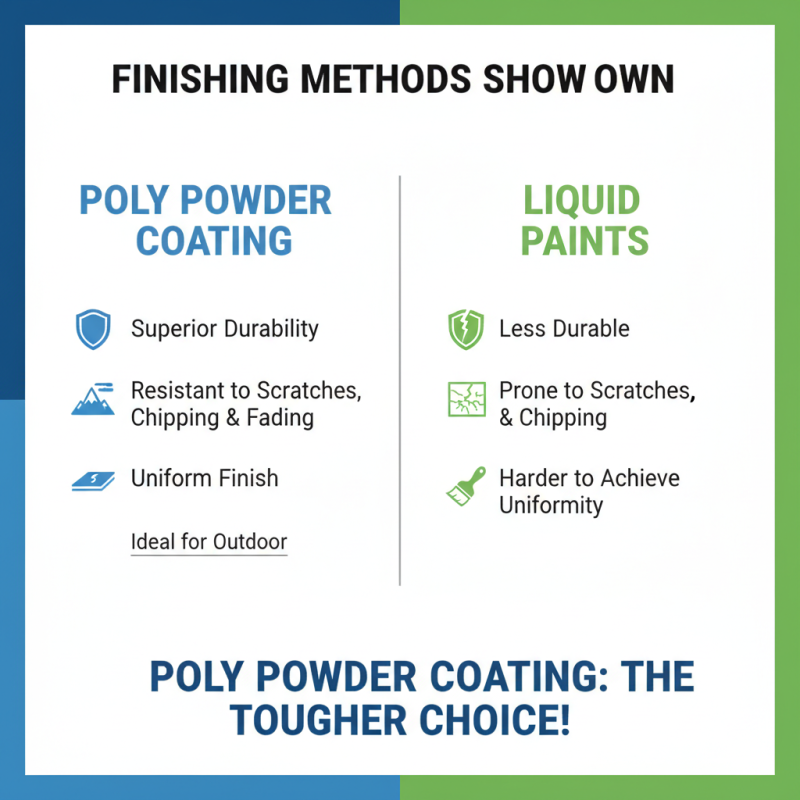
When comparing poly powder coating to other finishing methods, clear differences emerge. Poly powder coating offers superior durability. It resists scratches, chipping, and fading better than conventional paints. This makes it ideal for outdoor applications. Plus, it provides a uniform finish that is hard to achieve with liquid coatings.
However, it’s not without challenges. The application process requires precision and skill. Improper techniques can lead to uneven surfaces. Some may find the initial setup costs higher than using traditional paints. Yet, in the long run, the longevity of poly powder coating often justifies the investment.
On the other hand, liquid coatings are easier to apply for small projects. They come in a wider range of colors and finishes. However, they don’t offer the same level of protection. Additionally, the environmental impact of solvent-based paints is a growing concern. In contrast, poly powder coatings release minimal volatile organic compounds. This aspect makes it more environmentally friendly, but some users may need time to adapt to this newer method.
Applications of Poly Powder Coating in Various Industries
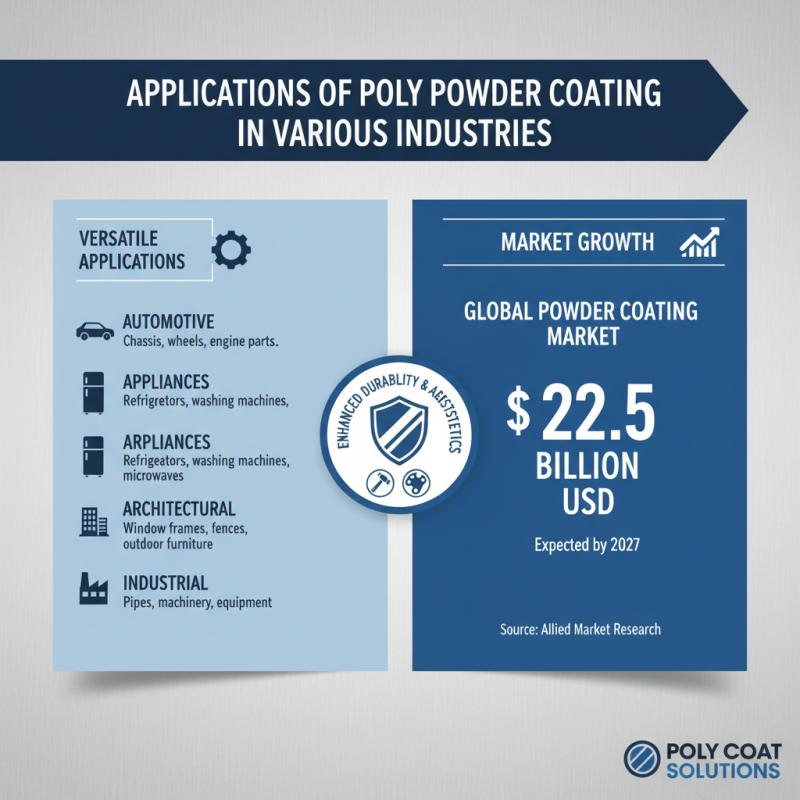
Poly powder coating offers versatile applications across various industries, making it an ideal choice for many projects. According to a report from Allied Market Research, the global powder coating market is expected to reach $22.5 billion by 2027. This growth highlights the material's effectiveness in enhancing product durability and aesthetics.
In the automotive industry, poly powder coating is commonly used for vehicle parts. It provides a tough protective layer that fights against rust and corrosion. A study found that coated parts can last 2-3 times longer than those without protection. In the architectural field, buildings benefit from poly powder coating on frameworks, adding color and resistance to the elements.
Tips: Before starting a project, assess the specific requirements for durability. Consider the environmental conditions where the product will be used. Take time to explore different finishes.
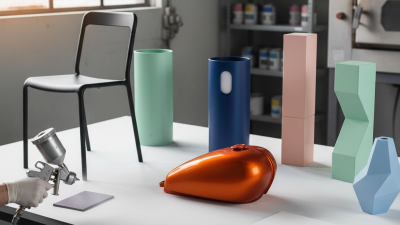
Poly powder coating is also finding its place in furniture manufacturing. Designers appreciate its versatility, allowing for bold colors and unique textures. However, some also express concerns over the environmental impact during the application process. Understanding the trade-offs is crucial for making informed choices.
Maintenance and Durability Considerations for Powder Coated Surfaces
Poly powder coating offers remarkable durability, making it an ideal choice for various surfaces. Once applied, it forms a tough layer that withstands harsh weather and daily wear. This is especially important in industries where equipment faces tough environments. The resistance to chipping and scratching means less frequent repairs, which is appealing. But, it's not foolproof.
Maintenance is crucial for longevity. Regular cleaning can enhance the powder coat's lifespan. Dust and grime can accumulate, leading to dull surfaces. Neglecting this might result in costly refurbishment. Also, some areas may require more frequent checks, especially where might contact or abrasion occurs. Considerations for color fading are also necessary. Certain pigments may lose vibrancy over time, particularly under constant sunlight.
Using poly powder coatings requires a balance. While the initial investment can be high, the reduced need for maintenance and repairs pays off. However, it's essential to recognize moments when the coating may fail. Keeping tabs on the condition enables enough time for intervention before serious damage occurs. Being proactive yields better outcomes and a more satisfying experience in the long run.
Why Choose Poly Powder Coating for Your Next Project? - Maintenance and Durability Considerations for Powder Coated Surfaces
| Consideration |
Description |
Benefits |
| Durability |
Powder coating provides a robust finish that withstands wear and tear. |
Long lifespan and reduced need for replacement. |
| Maintenance |
Easy to clean and maintain with simple soap and water. |
Cost-effective maintenance over time. |
| Corrosion Resistance |
Offers protection against rust and environmental damage. |
Improved longevity of exterior products. |
| Aesthetic Versatility |
Available in a wide array of colors and finishes. |
Customization options to suit design needs. |
| Environmental Impact |
Uses less energy during application and emits fewer pollutants. |
Eco-friendly choice for sustainability. |