
Leave Your Message

2026 Best Electrostatic Coating Techniques for Superior Finish?

Electrostatic Coating has revolutionized the finishing industry. This technique offers a superior finish that enhances durability and aesthetics. Industries like automotive and appliances benefit significantly from it. The process involves electrically charging paint particles, which then adhere to the object being coated. This results in minimal waste and even coverage.

However, achieving the perfect finish is not always straightforward. Factors like humidity, temperature, and material types can impact results. Inconsistent surfaces can lead to uneven coatings. Many professionals still question how to refine their application methods effectively. They often overlook these details, risking quality in their work.

As we explore the best electrostatic coating techniques of 2026, we'll address these challenges. Understanding the intricacies will help you refine your approach. This journey may bring new insights into achieving that impeccable finish we strive for.
2026 Best Electrostatic Coating Techniques for Superior Finish?

Overview of Electrostatic Coating Techniques

Electrostatic coating techniques are gaining traction for achieving superior finishes in various industries. These methods use electrically charged particles to ensure even coating on surfaces. According to recent industry reports, electrostatic powder coating can achieve about 90% transfer efficiency. This means most of the powder particles adhere to the surface, minimizing waste and optimizing material usage.

However, while the benefits are clear, challenges remain. Not all surfaces are ideal for electrostatic coating. Uneven surfaces can lead to poor adhesion. Additionally, achieving a consistent finish requires precise control of variables like humidity and temperature. Data shows that fluctuations in these factors can lead to differences in the final appearance. An operator's experience also plays a crucial role, as miscalculations can cause significant rework. Ensuring every aspect is optimized is a continuous effort and requires ongoing training.

Despite its potential, some manufacturers might face initial resistance due to perceived complexity. Transitioning to electrostatic coating can require significant changes in equipment and processes. Nevertheless, the long-term benefits, such as reduced material costs and improved finish quality, can outweigh these challenges. It is essential to analyze specific needs and capabilities before making the switch.

2026 Best Electrostatic Coating Techniques for Superior Finish

Technique Description Applications Advantages Disadvantages
Corona Charging Utilizes high-voltage corona discharge to charge paint particles. Automotive parts, appliances. High transfer efficiency, minimal overspray. Limited to conductive substrates.
Triboelectric Charging Charges particles through contact and friction with another material. Architectural finishes, electronics. Versatile, works with a variety of materials. Lower transfer efficiency compared to corona charging.
Electrostatic Spray Painting Sprays charged particles towards a grounded substrate. Furniture, metalwork, automotive. Even coating, less wasted paint. Requires specialized equipment.
Powder Coating Uses dry powder which is electrostatically charged before being applied. Metal parts, outdoor furniture. Durable finish, eco-friendly. Requires post-application curing step.
Hybrid Coating Systems Combines liquid and powder coating techniques for enhanced results. Automotive and appliance industries. Improves adhesion and reduces defects. More complex application process.

Key Advantages of Electrostatic Coating for Superior Finishes

Electrostatic coating offers several advantages for achieving superior finishes. This technique ensures an even application of paint or powder over various surfaces. It uses charged particles that adhere well, reducing waste and overspray. This results in a smooth, uniform finish that enhances the visual appeal of products.

One notable benefit is the efficiency in paint usage. Electrostatic coating often requires less material to achieve the same coverage. This reduces costs and environmental impact. However, the process can be challenging. Surface preparation is crucial to avoid imperfections. Contaminants can lead to subpar finishes. Attention to detail in the pre-coating process can prevent further issues.

Another consideration is the compatibility of materials. Not all surfaces react the same way to electrostatic applications. Adapting techniques may be necessary for different materials. It's essential to test before large-scale production. This reflects the need for ongoing evaluation and adjustment in practices. Through careful monitoring, manufacturers can better achieve the desired outcomes.

Step-by-Step Process of Electrostatic Coating Application

Electrostatic coating is a popular technique for achieving a smooth, durable finish on various surfaces. The process begins with surface preparation. Cleaning the surface removes contaminants. Then, a primer may be applied for better adhesion. This step greatly impacts the final result. Skipping it can lead to issues like peeling or uneven texture.

Next, the electrostatic application begins. The coating powder is charged, allowing it to adhere to the grounded surface. Care must be taken to maintain a consistent thickness across the surface. Overlapping can cause uneven areas, and undercoating may leave spots exposed. After the application, curing is essential. This typically involves heating the coated object. Proper curing ensures a robust and long-lasting finish.

Even experienced professionals face challenges in this process. Variables such as humidity and temperature can affect the coating's quality. Regular checks are necessary to avoid defects. It’s important to evaluate the results critically. Identifying imperfections helps refine the process for future applications. Each project is a learning opportunity, pushing for improvements in the electrostatic coating technique.

Common Challenges and Solutions in Electrostatic Coating

2026 Best Electrostatic Coating Techniques for Superior Finish?

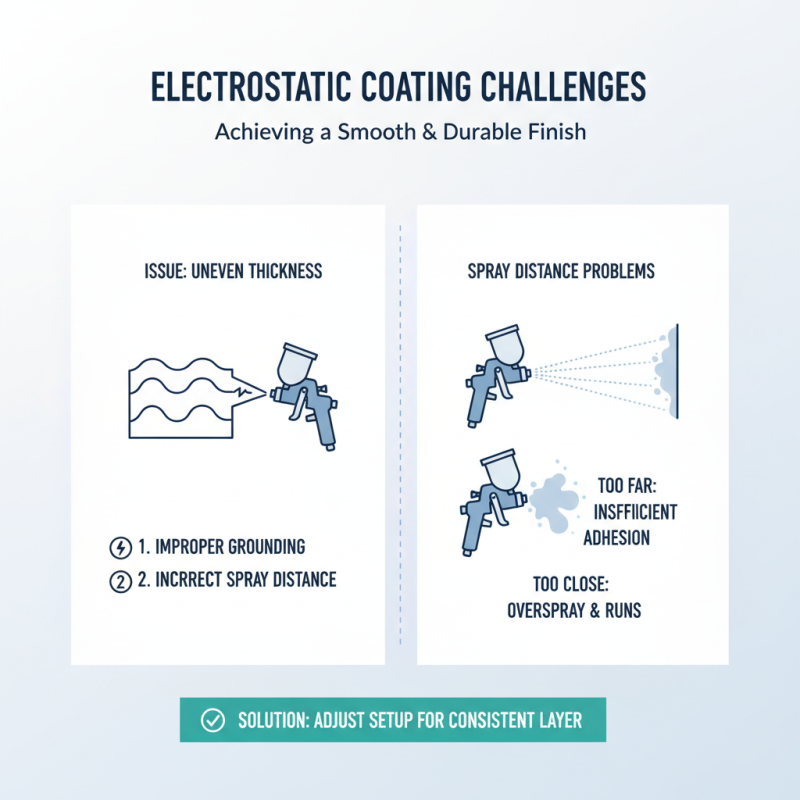
Electrostatic coating offers a smooth and durable finish, but challenges can arise during the process. A common issue is uneven coating thickness. This often stems from improper grounding or incorrect spray distance. When the distance is too far, the paint may not fully adhere. When too close, overspray can occur. Adjusting the setup can help achieve a consistent layer.

Another challenge includes contamination on the surface. Dust and oil can lead to imperfections. Thorough cleaning of the surface is crucial before application. Using a proper cleaning agent can make a significant difference. Additionally, humidity and temperature control are vital. High humidity can affect the drying process, resulting in an unsatisfactory finish. Regular monitoring of these environmental conditions is important.

Despite these challenges, operators sometimes overlook equipment maintenance. A blocked nozzle or old hose can lead to inconsistent spray patterns. Regular checks can prevent these issues and enhance overall performance. Reflecting on these areas helps improve future applications and achieve a superior finish.

Future Trends in Electrostatic Coating Technology

2026 Best Electrostatic Coating Techniques for Superior Finish?

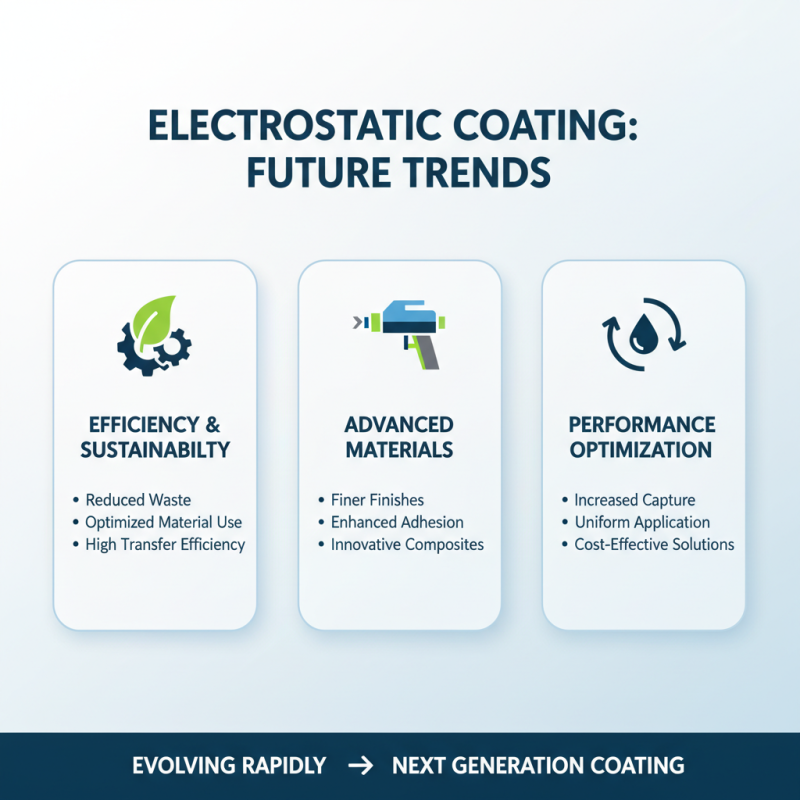
Electrostatic coating is evolving rapidly. Future trends reveal a focus on efficiency and sustainability. Advanced materials are emerging, enabling finer finishes and better adhesion. These innovations aim for reduced waste by optimizing material use. High transfer efficiency is a key goal, capturing more coating materials.

However, challenges remain. Not all surfaces coat evenly, leading to inconsistencies. The need for improved process control is evident. Techniques that account for complex shapes are still in development. Additionally, operators must adapt to new systems. Training remains crucial to harness the full potential of these technologies.

The integration of smart systems is on the rise. Digital monitoring tools can track application rates in real-time. This data helps refine techniques but also introduces complexity. Not every facility is prepared for these advancements. Understanding both benefits and pitfalls will shape the future of electrostatic coatings.