Top 10 Benefits of Antistatic Powder Coating for Various Applications?
Antistatic Powder Coating has emerged as a crucial solution in various industries. This technology addresses static electricity issues effectively. According to a report by the Powder Coating Institute, the global powder coating market is expected to reach $12 billion by 2027. This growth highlights the increasing demand for specialized coatings, including antistatic options.
Antistatic Powder Coating plays a vital role in electronics and packaging. It helps reduce dust attraction, which can damage sensitive components. Additionally, this coating enhances safety by preventing static discharge. An estimate from the National Fire Protection Association states that static electricity is responsible for thousands of fire incidents annually. Thus, using antistatic solutions is essential for workplace safety.
Despite these advantages, there are challenges. Not all applications require antistatic properties. Some industries may find the cost-benefit ratio unfavorable. Moreover, not every coating process ensures uniform application. These considerations prompt reflection on the best use of Antistatic Powder Coating in different contexts.

Understanding Antistatic Powder Coating: A Comprehensive Overview
Antistatic powder coating is a specialized finish used in various industries. It helps to dissipate static electricity, which can be harmful in many environments. These coatings are particularly valuable in electronics, pharmaceuticals, and food processing. Static can attract dust and other contaminants, risking product integrity. By utilizing antistatic coatings, companies mitigate these risks effectively.
The application process of antistatic powder coating involves electrostatic spraying. This method ensures an even distribution of powder over surfaces. However, achieving the right thickness can be tricky. Too thin a layer might not provide adequate protection, while too thick can lead to uneven surfaces. It's essential to find that balance, often requiring multiple test applications before acceptance.
Moreover, the durability of these coatings is commendable. They resist wear and can withstand harsh environments. Yet, factors like humidity and temperature fluctuations can affect their performance. Regular maintenance and evaluation are necessary to ensure long-term effectiveness. Businesses must remain vigilant to adapt to changing conditions and maintain the advantages of antistatic powder coatings.
Key Advantages of Antistatic Powder Coating in Industrial Applications
Antistatic powder coating plays a vital role in various industrial applications. One major benefit is its ability to reduce static electricity. According to the Electrostatic Discharge Association, static electricity can account for up to 30% of product failures in manufacturing. By using antistatic coatings, industries can significantly decrease these failures and improve overall productivity.
Another key advantage is the enhanced safety it provides. In environments with flammable materials, static discharge can pose serious risks. Research shows that antistatic coatings can lower the risk of ignition by more than 50%. This is particularly important in sectors like aviation and electronics, where safety is paramount.
Finally, antistatic powder coatings offer durable protection against wear and tear. They are resistant to chemicals and environmental factors, ensuring longevity. However, it's not universally applicable. Some surfaces may require more preparation before coating. Industries must assess specific needs carefully to optimize results. Careful consideration and application can lead to substantial benefits.
Enhanced Durability: How Antistatic Powder Coating Protects Surfaces
Antistatic powder coating offers enhanced durability, making it a prime choice for various surfaces. This coating minimizes electrostatic discharge, which can harm sensitive electronic components. When applied, it forms a robust layer that resists scratches and impacts. The result? A longer-lasting finish that appears vibrant and intact even in harsh environments.
In industries like manufacturing and healthcare, cleanliness is critical. Antistatic coatings prevent dust and debris from adhering, making it easier to maintain surface hygiene. However, not all coatings perform the same way. Some may fail to deliver the expected durability over time, leading to peeling or fading. Regular assessments can identify these issues before they escalate. Surface preparation is vital. If not done correctly, the coating may not adhere properly, compromising its protective qualities. The balance between durability and appearance is complex but essential.
Top 10 Benefits of Antistatic Powder Coating for Various Applications
| Benefit |
Description |
Applications |
| Enhanced Durability |
Provides a hard protective layer that resists scratches and chipping. |
Industrial Equipment, Automotive Parts |
| Static Electricity Control |
Minimizes dust accumulation and prevents sudden discharges. |
Electronics Manufacturing, Clean Rooms |
| Chemical Resistance |
Protects surfaces against harsh chemicals and solvents. |
Laboratory Equipment, Storage Tanks |
| Corrosion Resistance |
Prevents rust and degradation from environmental exposure. |
Outdoor Fixtures, Machinery |
| Longevity |
Extends the lifespan of coated products due to superior wear resistance. |
Consumer Goods, Furniture |
| Customizable Finishes |
Available in various colors and textures to meet aesthetic needs. |
Decorative Items, Auto Coatings |
| Low Maintenance |
Easier to clean and requires less frequent touch-ups compared to paints. |
HVAC Components, Machinery Parts |
| Environmental Safety |
Contains no hazardous solvents, making it safer for the environment. |
Food Packaging, Medical Devices |
| Application Versatility |
Can be used on various substrates, including metals and plastics. |
Appliances, Electronics |
| Cost-Effective |
Offers a long-term solution that reduces overall maintenance costs. |
Industrial Applications, Construction |
Applications Across Industries: Where Antistatic Powder Coating Excels
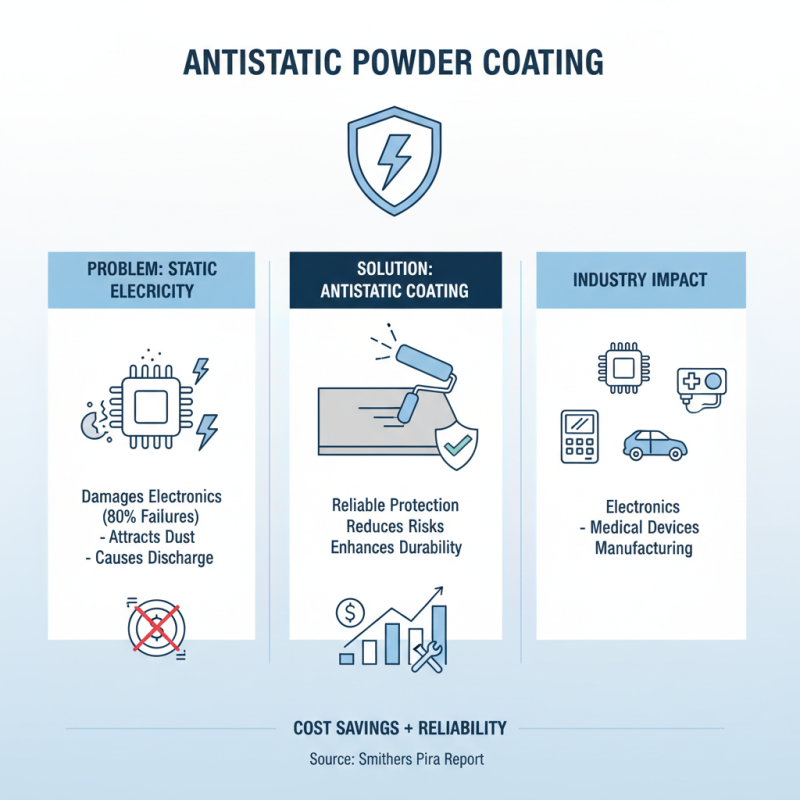
Antistatic powder coating plays a crucial role across various industries, especially where static electricity is a concern. In the electronics sector, for example, dust attraction and discharge can damage sensitive components. A report by Smithers Pira states that approximately 80% of electronic failures can be linked to static issues. Using antistatic powder coating can drastically reduce these risks. It provides a reliable layer of protection, helping manufacturers save costs and enhance product durability.
In the cosmetic and pharmaceutical industries, cleanliness is vital. Antistatic coatings help keep surfaces free from dust and contaminants. The American Coatings Association highlights that static control can improve production efficiency by up to 30%. However, it’s essential to maintain these coatings properly. Over time, the effectiveness can diminish due to wear and tear, leading to potential risks. Regular inspections and maintenance are necessary to ensure optimal performance in these sensitive environments.
Cost-Effectiveness of Antistatic Powder Coating Solutions for Businesses
Antistatic powder coating provides strong advantages for businesses, especially in terms of cost-effectiveness. These coatings lessen static electricity, which can lead to significant savings on maintenance and replacements. Industries like electronics or pharmaceuticals have reported up to 30% reductions in equipment damage due to static. This not only preserves product integrity but also minimizes production downtime.
Using antistatic coatings can also lower the risk of accidents caused by static discharge. An industry report indicated that about 70% of manufacturing facilities experience static-related issues. When businesses invest in these coatings, they often recover the initial costs within a year due to reduced repair and replacement expenditures. This financial benefit shouldn't be overlooked.
Tips: Consider your industry’s specific needs. Antistatic coatings may vary in effectiveness based on the application environment. Don’t invest blindly; analyze your long-term goals. Also, training staff on handling these materials can improve outcomes. Remember, while these coatings are beneficial, they require proper application and maintenance to maximize performance.